
Wool explained
From Fleece to Fibre: How Sheep’s Wool Becomes Something Useful
Explore the journey from annual shearing to grading, washing, carding, spinning and finished wool—and why skilled handling matters.
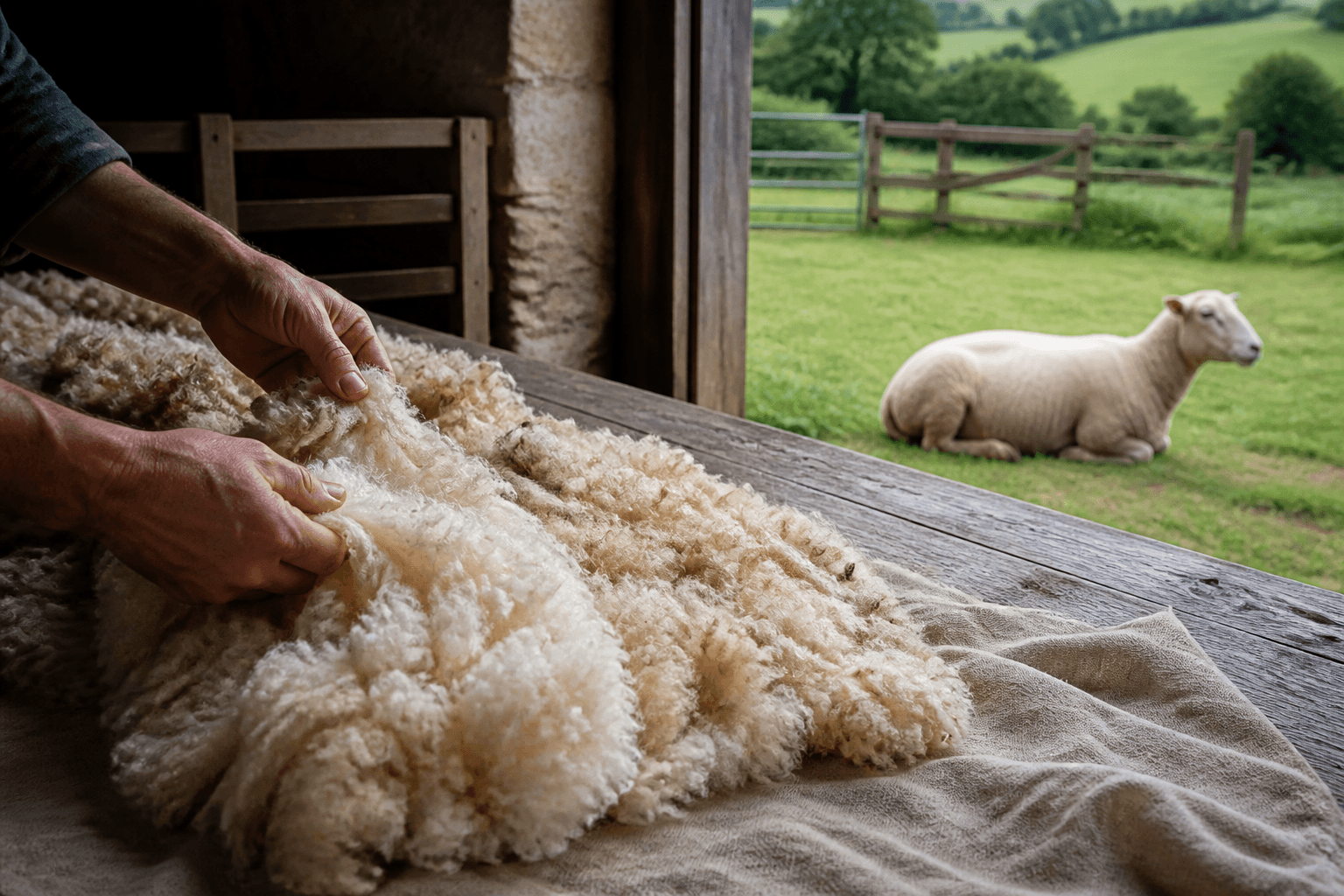
A fleece is not a finished fabric waiting to be unrolled. Between sheep and sweater lies a chain of skilled decisions: welfare-conscious shearing, careful presentation, grading, washing, fibre preparation, spinning and construction.
Shearing begins with welfare
Adult wool sheep usually need shearing at least once a year. The purpose is husbandry: removing a full fleece helps manage comfort and health. It must be done by an experienced, competent shearer who handles the animal calmly and treats any accidental wound immediately.
Weather matters after the fleece comes off. UK guidance specifically advises using forecasts and shelter to avoid cold stress in newly shorn sheep. Good shearing is therefore part of a plan, not an isolated spectacle.
One fleece, many characteristics
After shearing, the fleece is presented cleanly and unsuitable material is separated. Grading is more nuanced than simply naming the breed. British Wool assesses characteristics such as fineness, length, strength, colour, uniformity, handle and lustre.
Even fleeces from sheep of the same breed and flock can differ. British Wool says a farm’s clip may sort into many quality grades. Those differences help determine whether fibre is suited to apparel, furnishings, carpet, insulation or a blend.
The journey after grading
British Wool’s educational sequence sets out the broad process: shearing, grading, sale, scouring, carding, combing, spinning, weaving and dyeing. Not every product uses every step in exactly that order—knitting uses yarn rather than woven cloth—but the list reveals how much work sits between raw fleece and a useful object.
- Scouring removes grease, soil and other matter
- Carding opens and aligns the washed fibres
- Combing further straightens fibres for worsted yarns
- Spinning adds twist to make yarn
- Knitting, weaving or felting creates structure
- Finishing controls handle, dimensions and appearance
Is wool sustainable? Ask a better question
Wool is a naturally grown, renewable fibre and can biodegrade under suitable conditions. Those properties are valuable, but no material is impact-free. Land management, animal welfare, processing energy, chemistry, product durability and end-of-life all influence the full picture.
The useful question is not whether every wool product is automatically sustainable. Ask where the fibre came from, how well the object is made, how long it will be used and whether its maker can support specific claims.
Why traceability changes the story
Traceability restores context. Instead of meeting wool only as a label, you understand fleece as one part of a sheep’s annual cycle and a chain of specialist work.
SheePatron does not imply that every patronage item is made from the chosen sheep’s own fleece. That would require a separate, verifiable fibre chain. What the experience can offer is something equally honest: a closer view of the animal, season and craft behind the material world.