
Sheep behaviour
Are Sheep Intelligent? What Science Says About Memory, Faces and Personality
Sheep are skilled learners with strong social memories and individual personalities. Discover what research reveals about how sheep think and relate.
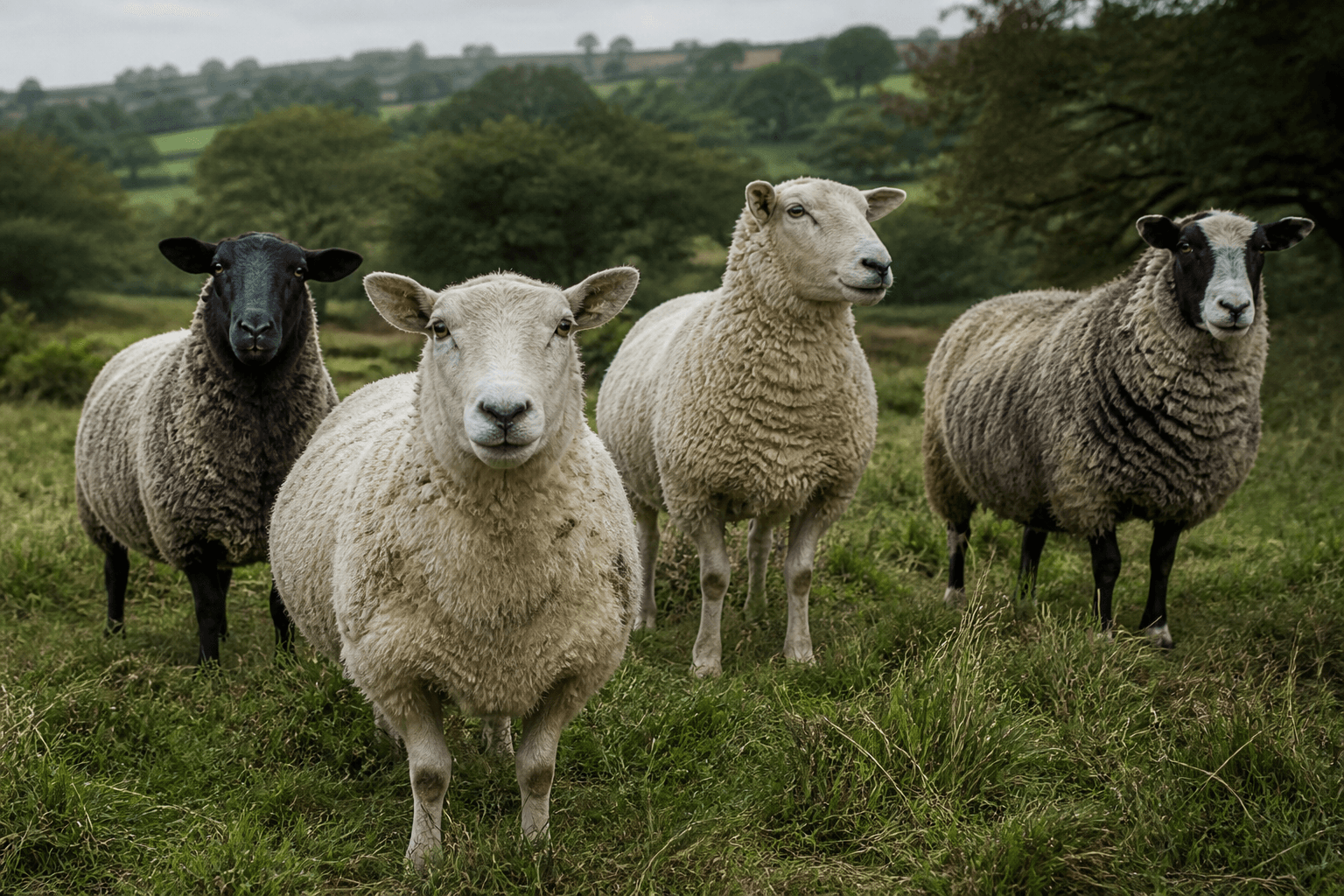
Calling sheep ‘followers’ misses most of the story. Their intelligence is specialised for a social grazing animal: they learn, remember, discriminate between faces, respond to familiar individuals and navigate a world built around flock relationships.
Intelligence is not one ladder
Animal intelligence is often judged by how closely another species performs a human task. A better question is what mental abilities help that animal live well in its own world. For sheep, that means social recognition, spatial memory, flexible learning, threat assessment and finely tuned communication.
A 2025 scientific review identified sheep studies testing memory, behavioural flexibility, sensory discrimination, problem-solving and decision-making. The evidence does not turn sheep into woolly humans; it shows a capable mind adapted to sheep life.
Sheep can recognise faces
In a Royal Society Open Science study, eight sheep learned to identify photographs of four unfamiliar human celebrities. They chose learned faces above chance and still recognised them when the images were tilted. When shown photographs of a familiar handler, they identified that person without prior training for the task.
This fits what flock keepers observe: faces, voices, routines and contexts matter. Recognition is one reason a named-sheep experience can become richer over time. The keeper is not looking at an interchangeable white shape; they are noticing an individual within a social group.
Do sheep have personalities?
Personality does not require a human-style biography. In animal behaviour, it means relatively consistent differences in how individuals respond. One sheep may approach novelty quickly; another may stay behind a confident companion. Some are socially assertive, others steady or cautious.
A review of positive welfare in sheep describes affiliative and aggressive social relationships and notes that individual differences can influence learning and cognition. Good observation respects those patterns without over-interpreting every ear flick as a human emotion.
Why the flock matters
Sheep are profoundly social. Group living offers information and security, but it also means handling and housing decisions affect welfare. Contemporary behaviour research emphasises sensory, social and maternal behaviours as central to understanding what sheep need.
This is why responsible care avoids treating companionship as optional. It is also why a sponsorship story should keep the individual in context: meet each sheep, but notice who she chooses to stand beside and how she moves with the flock.
How to watch sheep more intelligently
Look for patterns, not tricks. Who arrives first? Who pauses before crossing a gateway? Which animals rest near each other? What changes with weather, pasture or routine? Repeated observation is more revealing than a single dramatic moment.
The surprise is not that sheep can be trained to do a clever task. It is that quiet, everyday flock life contains so much information once we learn how to look.